Why Floor Finish Fails: Common Causes and How to Prevent Them
The short answer: Floor finish usually fails because of the process around it, not the product in the pail. The most common causes are residue left on the floor before finishing, coats that are too thin or uneven, too little dry time between coats, too many coats in one day, and a maintenance program that does not match the traffic the floor receives.
A freshly finished floor can look excellent on the day the job is done and still haze, streak, dull or scuff far sooner than anyone expected. The natural reaction is to blame the finish. Sometimes that is fair. Far more often the problem began earlier, during stripping, rinsing, application or drying, or later, in how the floor was looked after.
Professional floor care is a system. The floor under the finish, the chemistry, the equipment, the application method, the conditions in the room and the ongoing maintenance all shape the result. That is why knowing why a finish fails is worth more than knowing how to put finish on a floor.
What is floor finish supposed to do?
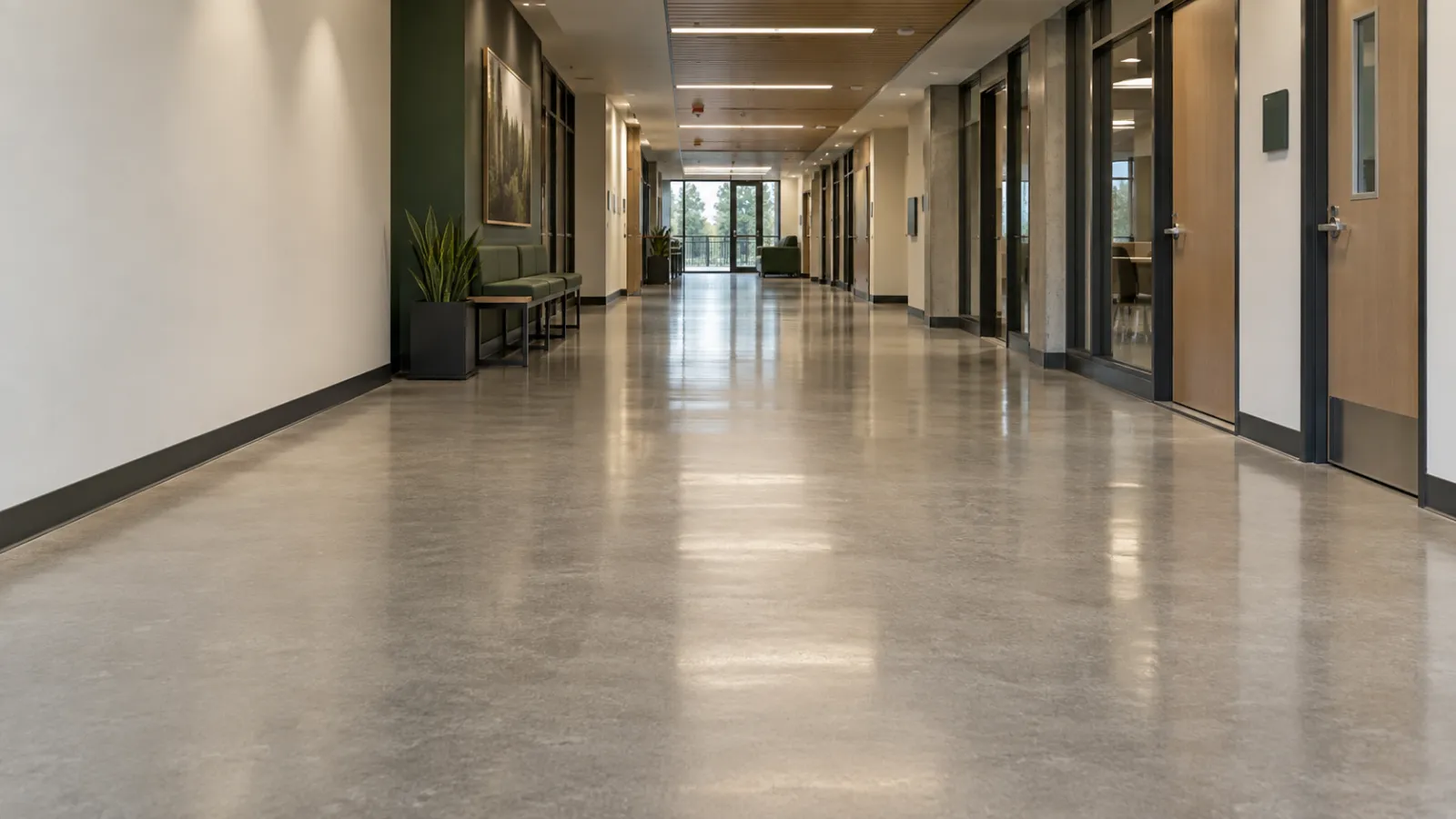
Commercial floor finish, often still called floor wax, is a protective coating applied to compatible resilient flooring such as vinyl composition tile (VCT). It takes the wear from foot traffic, grit and soil so the flooring underneath does not, and it gives you a surface that can be cleaned, buffed or burnished to bring the appearance back.
The distinction between the floor and the finish matters. When a finished floor turns dull, scratched or discoloured, the flooring itself may be perfectly sound. It may only be the coating that has worn or become contaminated. Stripping and refinishing is a very different job, and a very different cost, from replacing a damaged floor.
The most common causes of floor finish failure
1. Residue left behind before the finish goes down
Application is not the start of the job. Preparation is. If old finish, stripper residue or soil is still on the surface, the new finish bonds to that material instead of to a clean floor. 3M’s guidance on floor haze and streaks recommends flood rinsing a stripped floor at least twice before applying finish, so chemical residue and debris are removed. A floor can look ready and still not be ready, which is why experienced floor technicians check more than appearance.
2. Coats that are too thin, too heavy or uneven
Both extremes cause trouble. 3M lists too little product as a cause of haze and streaks, because a thin, inconsistent coat leaves uneven film across the floor. Heavy coats create the opposite problem: they take much longer to dry, and the next coat can seal in moisture. The goal is the even, medium coat the manufacturer specifies, applied the same way across the whole floor.
3. Not enough dry time between coats
Finish has to release its liquid and form a film before the next coat goes on. Recoat too early and the result is often cloudiness or streaking. Temperature, humidity and airflow all change dry time, so the time printed on the label is a starting point, not a stopwatch. 3M suggests testing a spot you can reach and then allowing extra time for areas you cannot check.
4. Too many coats in one day
More is not better. 3M advises against applying more than four coats in 24 hours because the lower layers may not cure properly. If a floor needs a deeper build, spread the work over more than one day.
5. Too much cleaning chemical during daily maintenance
A finished floor that looks dirty or feels tacky is often carrying detergent residue. Over-concentrated cleaner leaves a film that attracts soil, and the usual response, adding even more chemical, makes it worse. The Canadian Centre for Occupational Health and Safety (CCOHS) advises following the manufacturer’s instructions when diluting cleaning products. A neutral floor cleaner at the correct dilution, with clean solution and clean mops or pads, protects the finish instead of attacking it.
6. A maintenance schedule that ignores traffic
Compare a building entrance with a protected corner of the same floor. Shoes carry grit, carts follow the same path every day, and entrances take the moisture and salt. Traffic lanes do not always mean the finishing job was poor. They often mean the maintenance frequency has not been matched to how the floor is actually used. The schedule should follow the conditions of the floor, not only the calendar.
Can burnishing fix a failing floor finish?
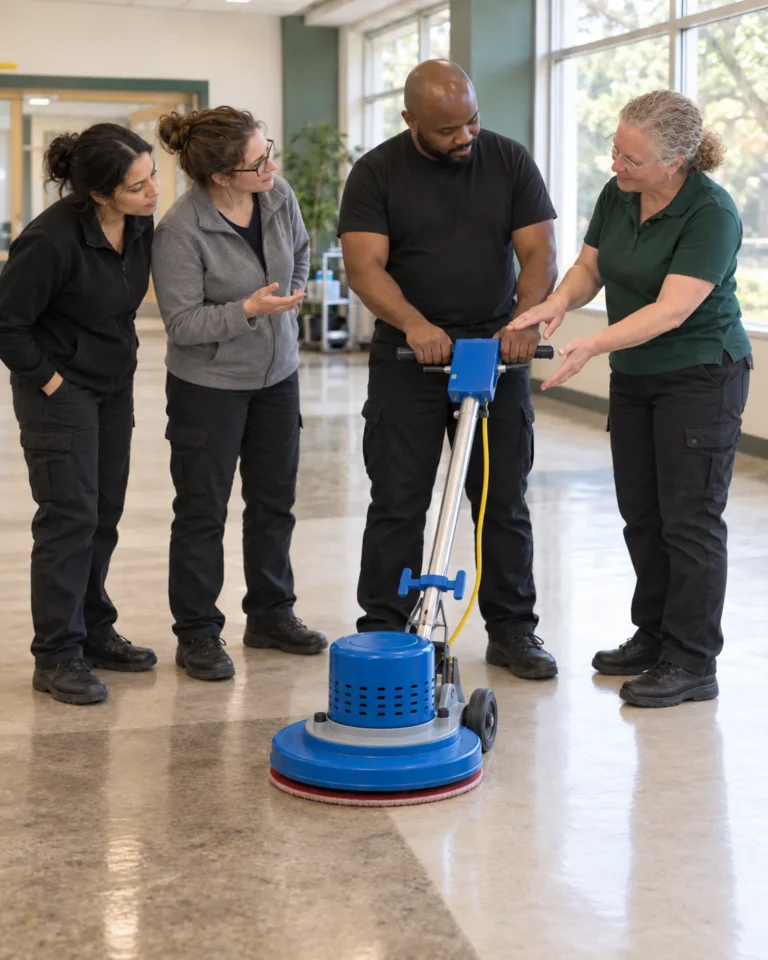
Sometimes burnishing improves the look of a compatible finish, but it is not a repair method. Tennant describes burnishers as high-speed machines, typically 1,500 to 2,500 RPM, used to produce a high gloss, while low-speed buffers at around 175 RPM handle scrubbing and stripping. If the real problem is contamination, poor adhesion or badly applied finish, polishing the top layer does not correct the cause. The floor may need a scrub and recoat, or a full strip and refinish. Our guide to commercial floor-care equipment explains what each machine is designed to do.
The useful question is not “what machine will make this shiny again?” It is “why did this floor lose its appearance in the first place?”
How to prevent floor finish problems
- Strip completely, then rinse thoroughly. Do not finish over residue.
- Use the finish system the flooring manufacturer allows, and follow the label for coat weight and number of coats.
- Apply even coats and let each one dry fully. Adjust for humidity, temperature and airflow.
- Do not rush the build. Spread heavy recoats over more than one day.
- Dilute daily cleaners correctly and change solution before it becomes dirty.
- Set maintenance frequency by traffic, with more attention at entrances and main corridors.
- Match pads and equipment to the finish and the task.
Product instructions always take priority, because finish systems differ.
Floor finish failure is usually a process problem
Good floor finishing depends on four things working together: surface, product, equipment and procedure. When one is wrong, the floor shows it. At Servitech Training we teach people what each step is accomplishing, not only the order of the steps, because that is what lets a technician spot a problem before an entire floor has to be redone. These are the same errors covered in our list of common commercial cleaning mistakes.
Related training: BSW 2: Hard Floor Care covers stripping, finishing and maintaining commercial hard floors, with hands-on instruction delivered on-site anywhere in British Columbia. Request training for your team.
Frequently asked questions
Why does floor finish peel?
Peeling usually points to poor adhesion. Common causes are contamination or stripper residue under the finish, an incompatible product for the flooring, or inadequate surface preparation. Check the floor and product specifications before assuming the finish is defective.
Why does floor finish look hazy or streaky?
Haze and streaks most often come from uneven or too-thin coats, recoating before the previous coat is dry, or applying too many coats in one day. Residue left on the floor before finishing can also contribute.
Should I apply thicker coats to make floor finish last longer?
No, unless the manufacturer specifies it. Heavy coats dry slowly and can interfere with curing. Even, medium coats applied to the label directions give a more durable film.
How many coats of floor finish does a floor need?
There is no universal number. It depends on the product, the floor condition, expected traffic and the maintenance program. Follow the flooring and finish manufacturers’ instructions.
How long should floor finish dry between coats?
Use the label time as a minimum, then adjust for temperature, humidity and airflow. Test an accessible spot and allow extra time for areas you cannot check.
What is the most important step when refinishing a floor?
No single step makes up for the others. Preparation, product selection, application, dry time and maintenance all determine how long the finish lasts.